FPV vs Traditional Drone Filming: Which Do You Need?
When a stabilised cinema or prosumer drone is right, and when an FPV one-take flythrough or chase shot tells the story better.
Traditional (GPS-stabilised) drones
Camera drones with a gimbal — from prosumer 4K/6K/8K aircraft to heavy-lift cinema drones with interchangeable lenses — deliver smooth reveals, orbits, tracking and high establishing shots. They suit real estate, tourism, corporate, wedding and most commercial work, and cinema drones match the look of A-camera footage on film and TV sets.
FPV drones
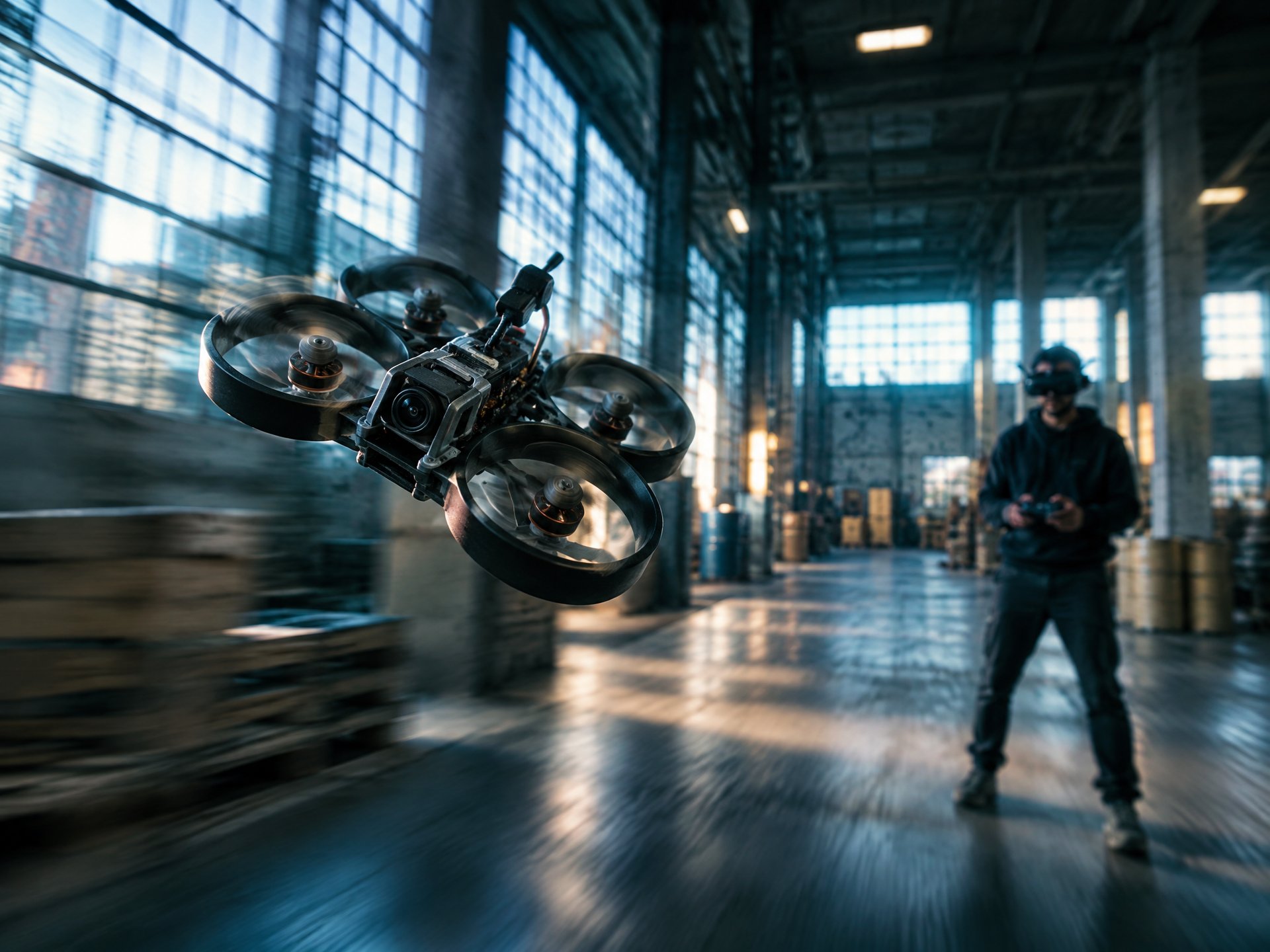
FPV (first-person view) drones are flown manually through goggles. Small ducted cinewhoops can fly safely through buildings and close to people for one-take venue tours, while larger FPV rigs chase cars, bikes and athletes at speed. The look is dynamic and immersive, but it needs a highly skilled pilot and careful safety planning.
Choosing between them
Pick by the shot list, not the trend. Many productions book both: a stabilised drone for wide, calm shots and FPV for a few signature moves. Ask providers for a showreel in the exact style you want — an FPV reel of a car chase does not prove indoor flythrough skill, and vice versa.
Safety and crew
FPV flights usually need a spotter or visual observer, and flights near people must meet the operations-over-people rules. A two-person crew (pilot plus spotter or camera operator) is normal for professional FPV work.
Ready to compare providers?
Describe your project once and get quotes from suitable drone filming providers.